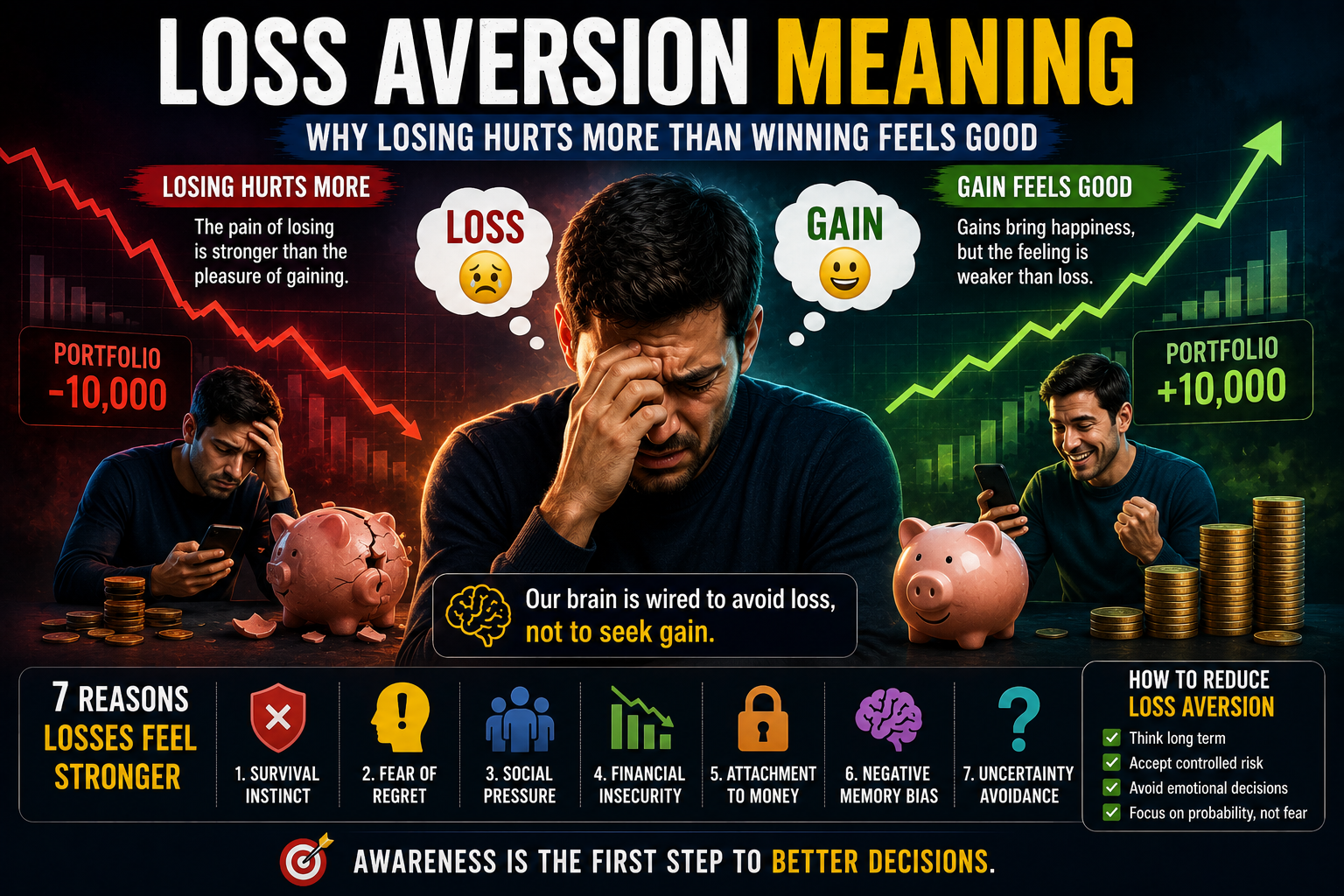


7 Reasons Money Pressure Is Why Most Financial Decisions Fail
Opinion • Money • Decision-Making
- What Money Pressure Really Does
- Why Intelligence Fails Under Pressure
- Income Dependency and Forced Urgency
- How Markets Exploit Pressure
- Why Systems Beat Motivation
- The Long-Term Damage
- Final Perspective
Most people believe bad financial decisions happen because of lack of knowledge. That belief is comforting — and wrong.
The real cause is money pressure.
When survival depends on the next paycheck, trade, or payment, the brain stops optimizing for correctness and starts optimizing for relief.
What Money Pressure Really Does
Money pressure does not reduce intelligence. It reduces time horizon.
Under pressure, waiting feels risky and action feels safe. This psychological shift explains why otherwise rational people make predictable mistakes.
Why Intelligence Fails Under Pressure
Behavioral finance repeatedly shows that intelligence does not protect against pressure. In fact, smart people often justify bad decisions more convincingly.
- Overtrading instead of waiting
- Overleveraging to speed up results
- Chasing trends after confirmation
- Ignoring predefined risk rules
According to research published by Harvard Business Review , decision quality drops sharply when outcomes feel personally urgent.
Income Dependency and Forced Urgency
When income is unstable, every decision becomes urgent. Urgency destroys patience, and patience is the foundation of good financial judgment.
This is why people remain trapped in cycles — not because opportunity is missing, but because pressure forces premature action.
You can read a deeper breakdown on decision frameworks here.
How Markets Exploit Pressure
Markets are not emotional systems. People are.
News alerts, social media narratives, and constant notifications exist to amplify urgency. Pressure creates predictable behavior — and predictable behavior creates opportunity for others.
As explained by Investopedia , emotional decision-making is the core reason retail participants underperform.
Why Systems Beat Motivation
Motivation fluctuates. Fear fluctuates. Confidence fluctuates.
Systems do not.
Rule-based frameworks remove emotion from execution. That single feature is enough to outperform talent over time.
Related perspective on system thinking can be found here.
The Long-Term Damage
Money pressure does not just affect wealth. It reshapes life decisions:
- Career choices
- Risk tolerance
- Mental stability
- Time freedom
Most people try to earn their way out of pressure. Very few design their way out.
Final Perspective
Financial freedom does not begin with more money.
It begins when decisions are no longer forced by urgency.
Until pressure is removed, even the best opportunities remain dangerous.
Disclaimer: This content is for educational purposes only and does not constitute financial or investment advice.