
Growth Headlines Don’t Match Reality in 2026: Why People Still Feel Financial Pressure
Explained · Global Economy
Table of Contents
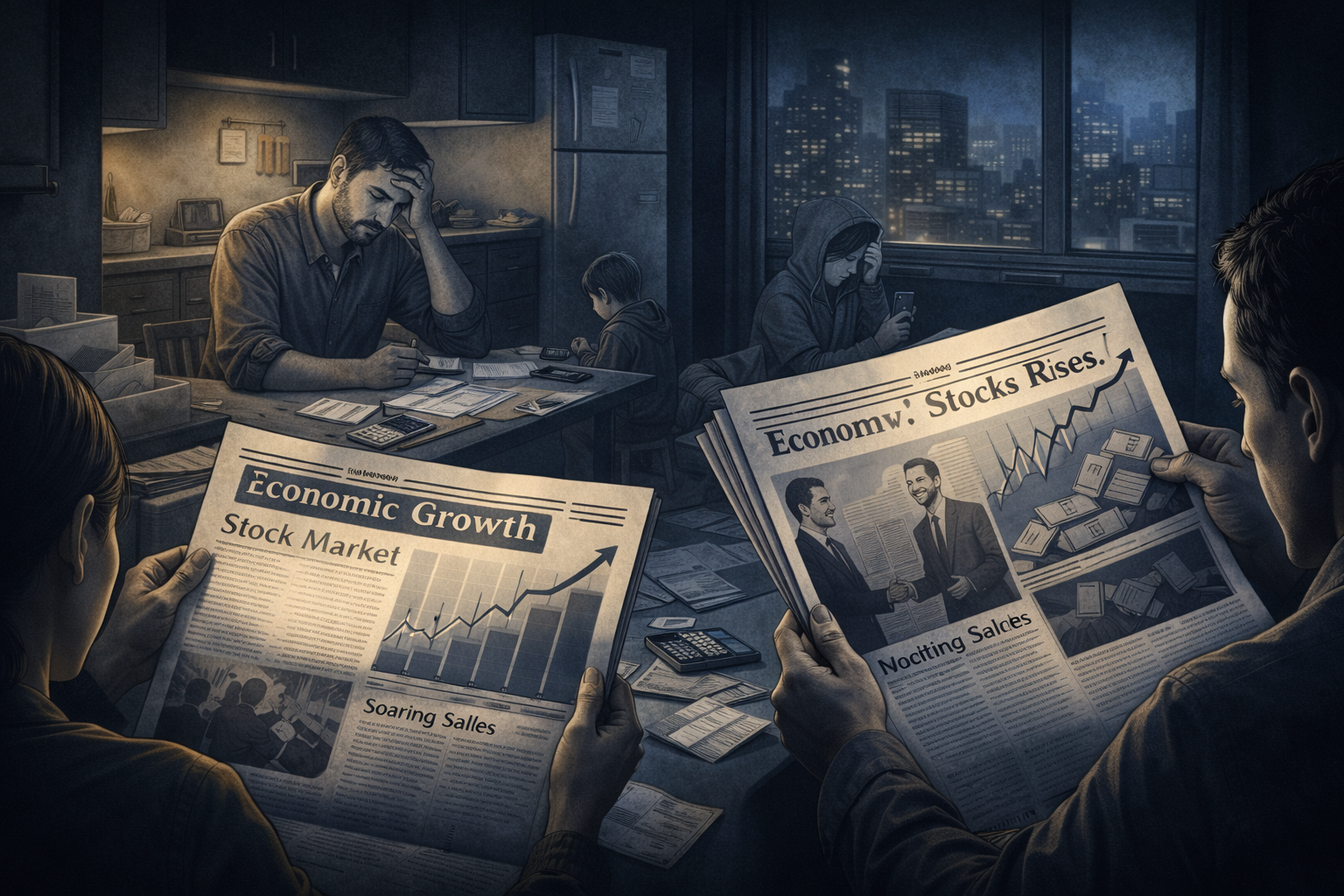
Growth headlines don’t match reality for millions of people in 2026. While news reports highlight economic stability, steady growth, and resilient job markets, everyday financial experiences tell a very different story.
This disconnect has become one of the most discussed economic questions today: if the economy is growing, why does life still feel expensive and uncertain?
Why Growth Headlines Don’t Match Reality
Economic growth is measured through averages. GDP, employment rates, and productivity figures capture broad trends, not individual experiences.
In 2026, growth exists, but it is uneven. Certain sectors, companies, and regions perform well, while many households struggle to keep up with rising costs.
Prices Stay High Even When Inflation Slows
Inflation rates may decline, but prices rarely fall back. Housing, healthcare, education, and insurance costs have permanently reset higher.
This is why growth headlines don’t match reality for families whose incomes have not adjusted at the same pace.
Wages Lag Behind Living Costs
Job markets appear stable, yet wage growth remains modest. Many workers experience job security without meaningful income improvement.
As a result, households manage by cutting discretionary spending, delaying major purchases, and increasing savings as a precaution.
Economic Growth Is Not Evenly Shared
Growth benefits asset owners more than wage earners. Equity markets, real estate, and corporate profits recover faster than household finances.
This imbalance reinforces the feeling that growth headlines don’t match reality, even when official data appears positive.
Psychology Plays a Major Role
After years of economic shocks, confidence recovers slowly. People remain cautious, even when conditions improve slightly.
Growth without confidence feels fragile and temporary.
Why This Gap Matters
When people disconnect from economic narratives, trust in institutions weakens. Consumption slows, optimism fades, and long-term planning becomes difficult.
This gap between data and lived experience shapes behavior more than headlines.
For more deep economic explanations, visit our Explained section.
Global economic indicators are tracked by the OECD .
Final Thought
The fact that growth headlines don’t match reality in 2026 does not mean growth is fake. It means growth is uneven, and everyday life reflects costs more than averages.
Disclaimer: Educational content only.

[5433]Kqsx – Đăng nhập tải app và chơi slot nổ hũ trực tuyến,Truy cập kqsx để trải nghiệm game slot nổ hũ và tìm hiểu cách chơi baccarat online dễ dàng. Hỗ trợ nạp tiền qua Momo nhanh chóng, tham gia ngay hôm nay! visit: kqsx
[1569]ubet লগইন ও অ্যাপ ডাউনলোড – বিকাশ ক্যাসিনো ডিপোজিট,ubet লগইন করার নিয়ম জানুন এবং অ্যাপ ডাউনলোড করে লাইভ ক্যাসিনো বোনাস অফার উপভোগ করুন। বিকাশ দিয়ে ক্যাসিনো ডিপোজিট করে আজই গেম শুরু করুন। visit: ubet