
How Money Works in the Economy: 7 Powerful Concepts Everyone Must Understand
Explained · Economic Education
Table of Contents
- What Is Money?
- Role of Banks
- Credit Creation
- Central Banks
- Inflation
- Interest Rates
- Economic Growth
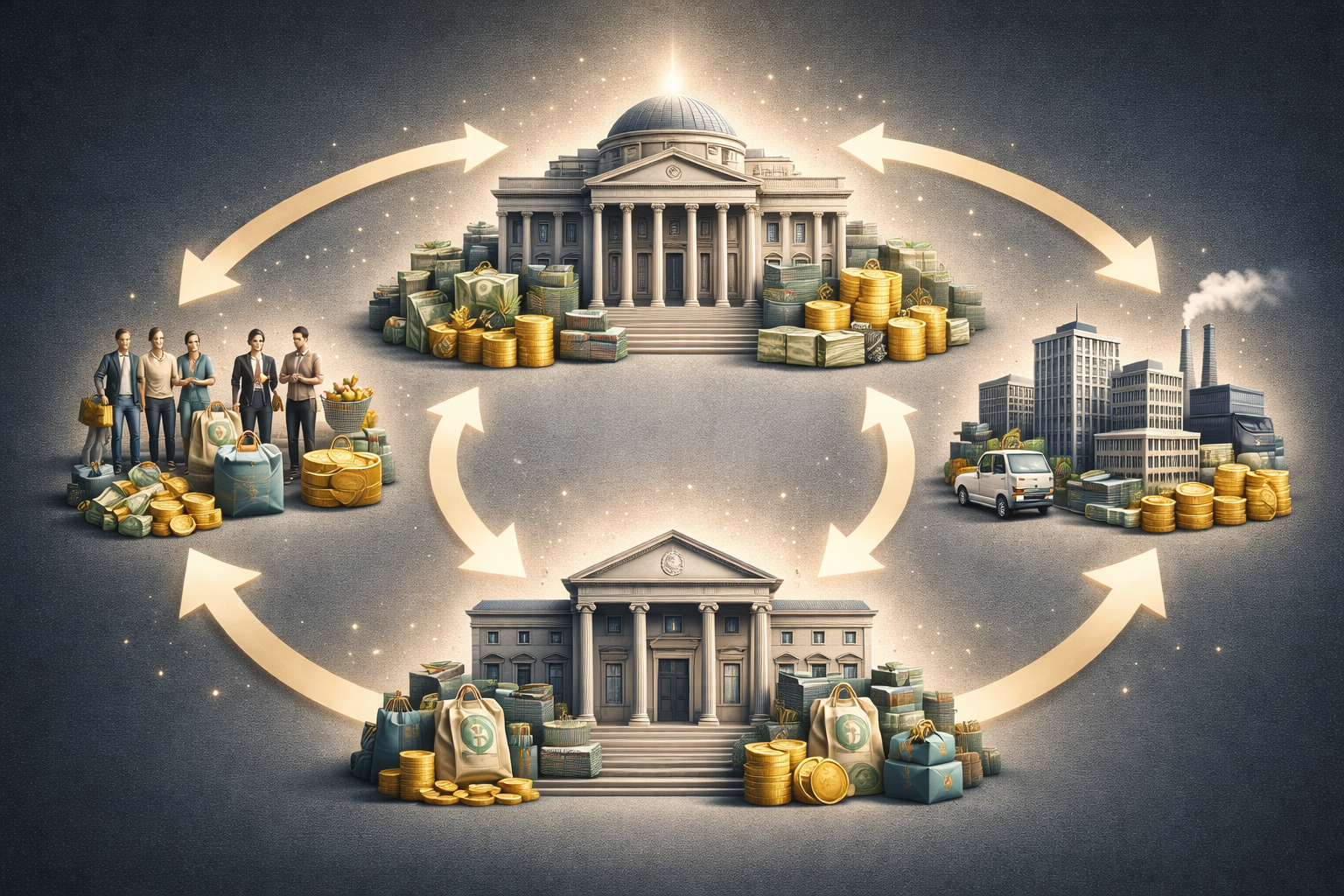
How money works in the economy is fundamental to understanding finance and markets. Money is not just paper currency; it represents value exchange within a structured system.
What Is Money?
Money functions as a medium of exchange, store of value and unit of account.
Role of Banks
Banks channel savings into productive investments.
Credit Creation
Through lending, banks expand money supply within regulated limits.
Central Banks
Central banks manage monetary policy to control inflation and maintain stability.
Inflation
Excess money supply relative to goods can cause price increases.
Interest Rates
Rates influence borrowing, spending and investment decisions.
Economic Growth
Productivity and innovation drive sustainable expansion.
More deep explanations are available in our Explained section.
Final Insight
Understanding how money works in the economy builds strong financial awareness and informed decision-making.
Disclaimer: Informational purposes only.