Silent Recession 2026: Why Economies Feel Weak Without a Crash
Explained
Table of Contents
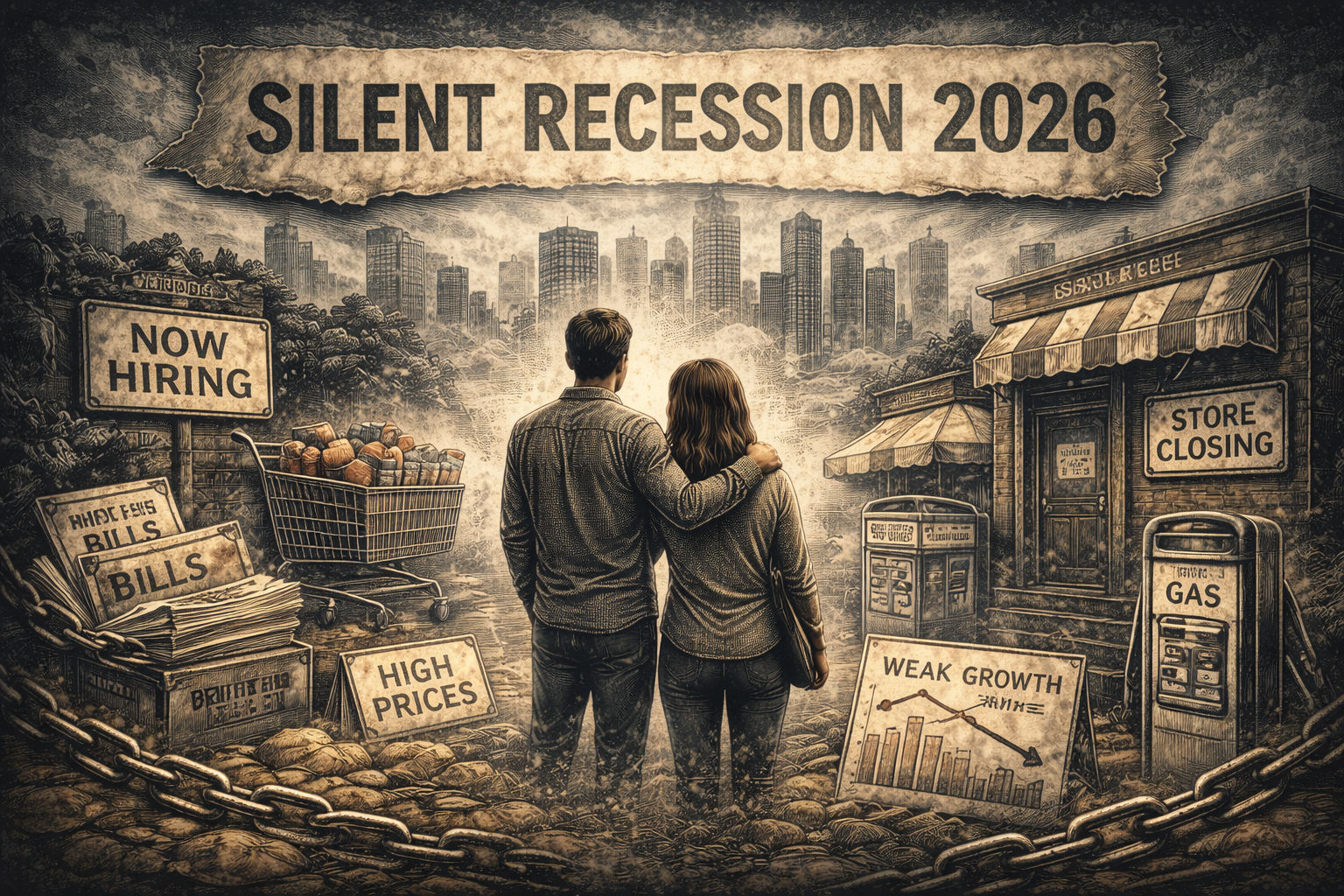
Silent recession 2026 describes a situation where economies slow down noticeably without entering an official recession.
There is no dramatic collapse, but growth feels absent.
What Is a Silent Recession
Economic indicators remain just above recession thresholds.
However, job creation, spending, and confidence weaken.
Why Silent Recession 2026 Feels Real
Households face higher living costs and slower income growth.
Businesses delay expansion and hiring.
Why There Is No Market Crash
Central banks and governments continue support measures.
In silent recession 2026, stability replaces growth.
Impact on Daily Life
Consumers cut discretionary spending.
Career mobility and wage bargaining weaken.
Why This Phase Lasts Longer
Without a sharp reset, slowdowns can persist.
Growth returns gradually rather than explosively.
Read more macro explanations in our Explained section.
Global growth trends are monitored by IMF.
Slowdowns hurt confidence more than crashes.
Final Thought
Silent recession 2026 explains why people feel pressure even when headlines look calm.
Disclaimer: Educational only.