
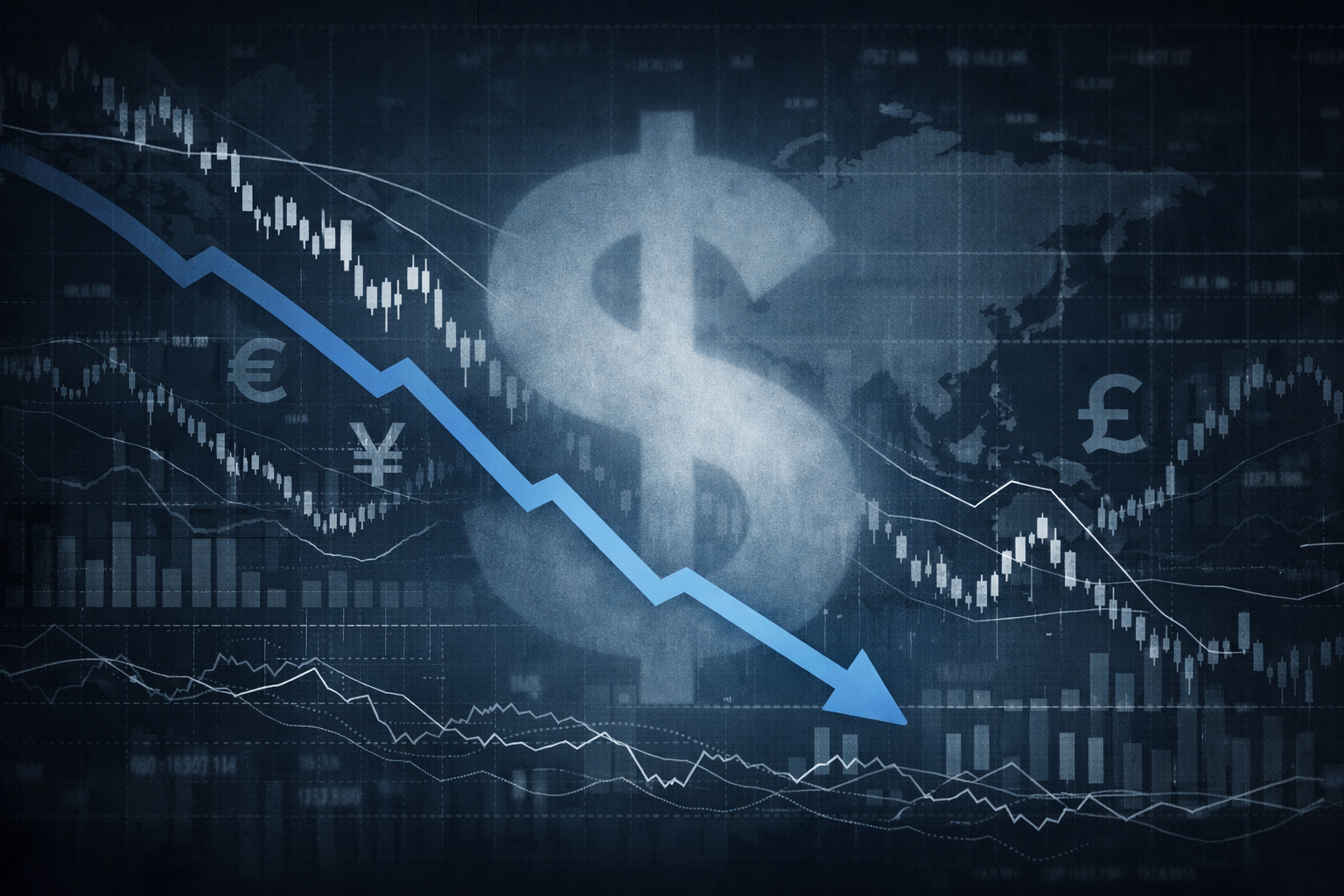
US Dollar Losing Strength in 2026: What It Means for Global Markets
Market · Currency
Table of Contents
US dollar losing strength has again become a key theme in global markets. While the move is gradual, it is persistent enough to influence investor decisions across currencies, commodities, and equities.
The pressure on the dollar reflects changing expectations around interest rates, fiscal spending, and global capital flows. Markets are adjusting quietly rather than reacting with panic.
When the US dollar losing strength becomes sustained, commodities such as gold and oil tend to benefit. A weaker dollar makes these assets cheaper for international buyers, supporting prices.
Equity markets respond more selectively. Export-oriented companies may gain, while sectors sensitive to inflation and borrowing costs remain cautious.
Emerging markets also feel the impact. Dollar weakness can reduce debt stress, but sudden shifts still create volatility in capital flows.
The timing matters. Investors were positioned for stability, not renewed currency pressure. That is why even moderate weakness is drawing attention.
For policymakers, a weaker dollar complicates inflation control. For investors, it highlights the need for diversification.
Track daily currency and market movements in our Market section.
Global currency trends are monitored by the Bank for International Settlements .
Final Thought
The US dollar losing strength is not a crisis signal, but it is a reminder that currency trends quietly shape global markets long before they dominate headlines.
Disclaimer: Market analysis only.