
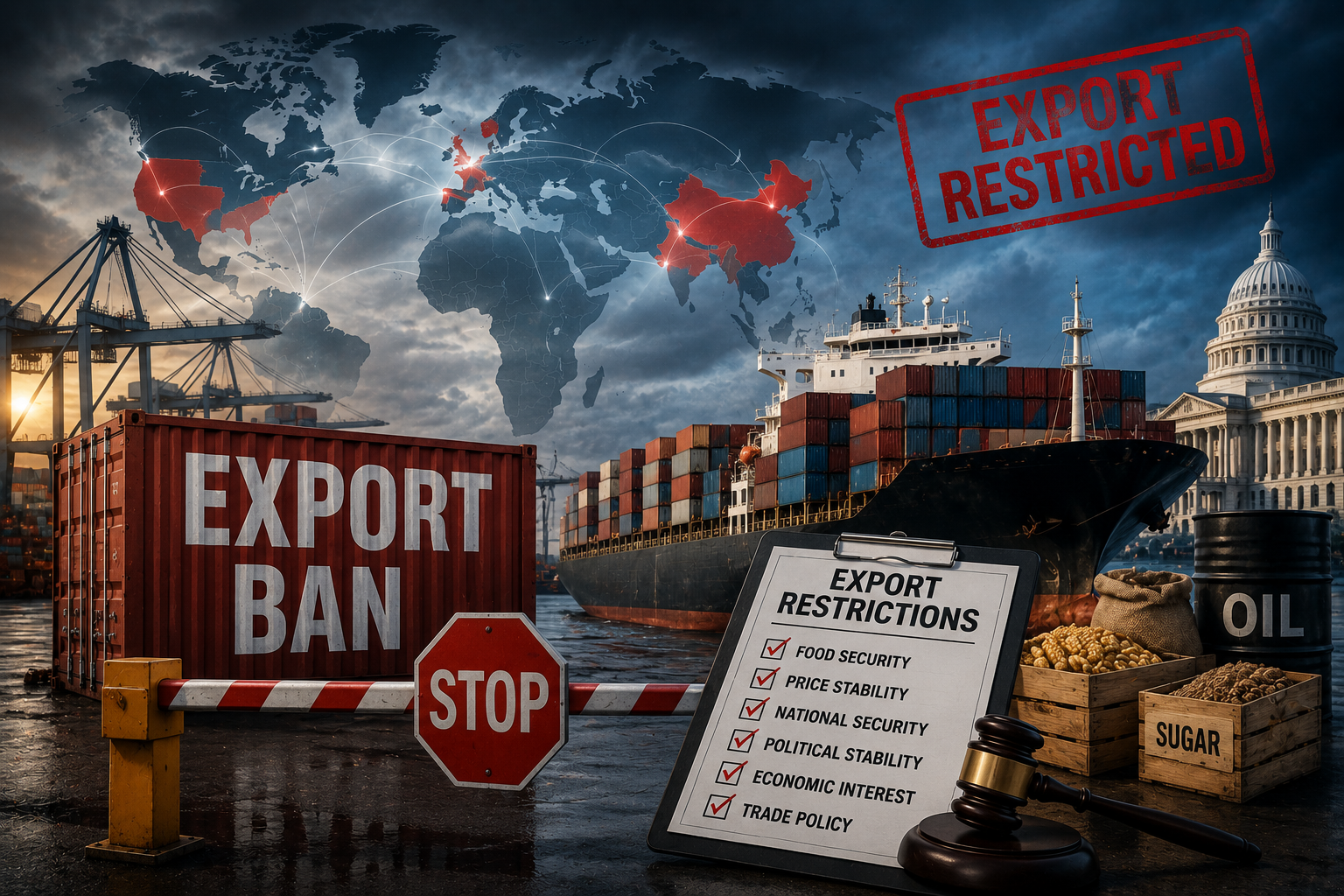
Why Countries Ban Exports: The Political and Economic Reasons Behind Export Restrictions
Governments often support international trade, but sometimes they suddenly stop exporting important products.
When people hear about export bans, they usually think it is only about economics. In reality, export restrictions are often linked to politics, national security and domestic stability.
Understanding why countries ban exports helps explain many global trade disputes and price shocks.
📌 What Is an Export Ban?
An export ban is a government policy that restricts or completely stops the sale of certain goods to foreign countries.
These restrictions may be temporary or long-term depending on the situation.
🌍 Why Countries Ban Exports
1. Food Security
Governments may restrict exports during shortages to ensure enough supply remains available for domestic consumers.
2. Controlling Inflation
If domestic prices rise rapidly, export bans can increase local supply and help reduce inflation.
3. National Security
Strategic products such as technology, minerals and energy resources may be restricted for security reasons.
4. Political Stability
Rising prices can create public dissatisfaction. Governments sometimes act to protect domestic markets.
5. Geopolitical Pressure
Countries may use export restrictions as a diplomatic or strategic tool during international disputes.
📊 Real-World Products Commonly Restricted
- Rice
- Wheat
- Sugar
- Rare Earth Minerals
- Oil and Gas
- Technology Components
⚠️ Hidden Consequences of Export Bans
While export restrictions may protect domestic markets, they can create global problems.
- Higher international prices
- Supply chain disruptions
- Trade tensions
- Diplomatic conflicts
- Market uncertainty
🌐 Why This Matters to Ordinary People
Even if someone never follows politics, export bans can affect daily life through:
- Food prices
- Fuel costs
- Inflation
- Product availability
- Economic growth
Global trade decisions often have direct local consequences.
🧠 Political Strategy Behind Export Restrictions
Export bans are not always economic decisions. In many cases, they are political tools used to strengthen domestic support, protect national interests or increase geopolitical influence.
🧩 Final Thoughts
The debate around why countries ban exports is ultimately about balancing domestic priorities with global trade relationships.
As the world becomes more interconnected, export restrictions increasingly influence inflation, geopolitics and economic stability across borders.
Explore more in our Political section.
Disclaimer: This article is for educational and informational purposes only. It does not represent political advice or endorsement of any government policy.
Yo, niw88bet’s got a solid range of betting options. Found something I liked right away. Worth a look if you’re into that niw88bet!
Hey, new8 seems promising. Early days yet, but the initial impression is good. I would suggest checking it out new8!
Alright, cw777login is now accessible. Quick registration process and easy navigation. Try it out cw777login!
[9643]gold88 | Link Vào Mới Nhất và Hướng Dẫn Chơi Baccarat Online,gold88 cung cấp link truy cập an toàn, hỗ trợ tải app chính thức và hướng dẫn nạp tiền qua Momo nhanh chóng. Khám phá kho slot game hấp dẫn ngay hôm nay! visit: gold88
I really appreciate how easy it is to navigate this site. Even for beginners it is very straightforward. Give pkluky97 a try!
A hidden gem for sure. I stumbled upon this site and I am glad I did. The gameplay is fluid and very satisfying. See inyy7 for yourself.
This is the go-to spot for Jili fans. The games are always updated and the lag is non-existent. Big love to phjilibay.
The odds here are actually decent compared to other sites I have used. The payout process is quick and transparent too. Definitely trust bd17777bet for your bets.