
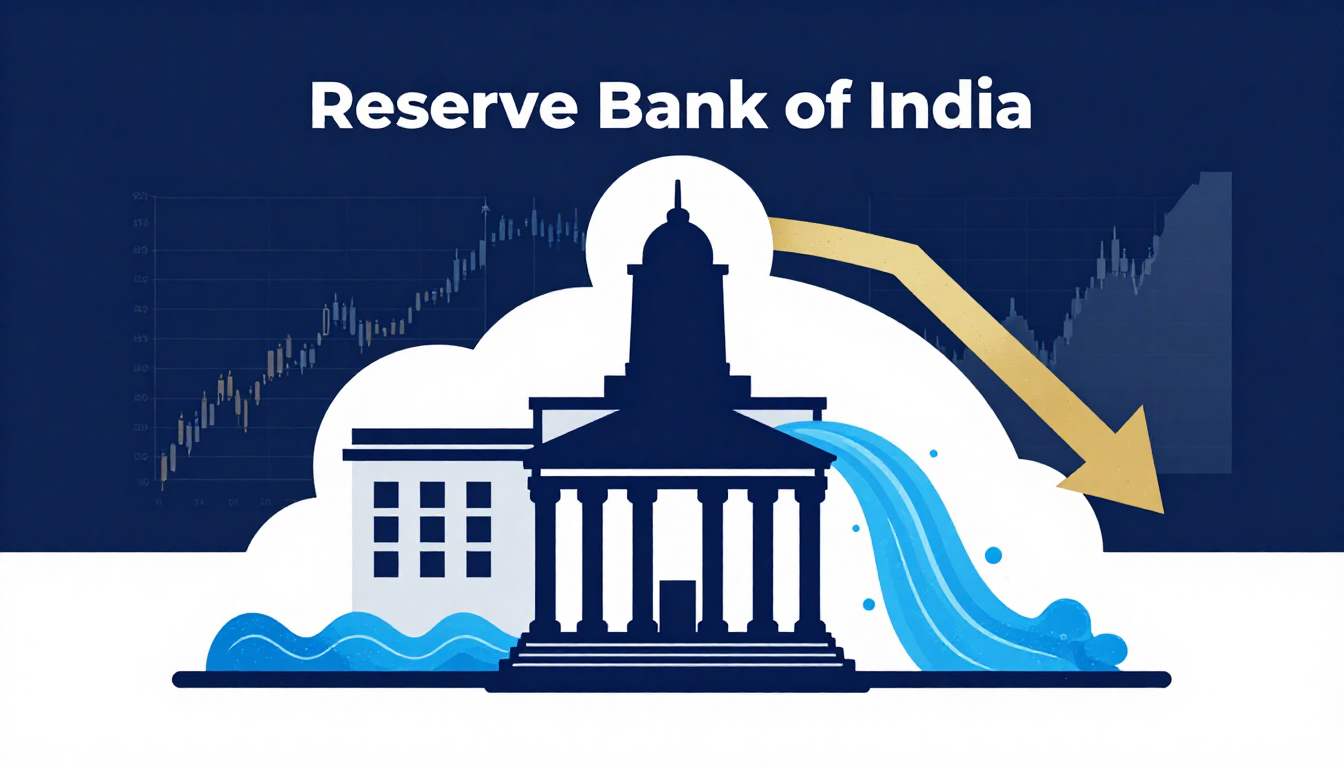
RBI Liquidity Injection: 7 Powerful Impacts on Markets
Finance • Monetary Policy • Indian Markets
RBI liquidity injection has become one of the most discussed topics in Indian financial markets in the last few hours. Whenever the Reserve Bank of India injects liquidity, it sends a clear signal to banks, bond markets, and investors.
This is not a short-term headline. RBI liquidity injection directly affects borrowing costs, bond yields, credit flow, and overall market stability. Understanding this concept is essential for anyone tracking the Indian economy.
Table of Contents
- What Is RBI Liquidity Injection?
- Tools Used for RBI Liquidity Injection
- Why RBI Injects Liquidity
- Impact on Bond Yields
- Impact on Banks and Credit
- What Investors Should Understand
- Final Summary
What Is RBI Liquidity Injection?
RBI liquidity injection refers to actions taken by the Reserve Bank of India to increase the availability of money in the banking system. This ensures that banks do not face cash shortages and can continue lending smoothly.
When liquidity is tight, interest rates rise and credit slows down. RBI liquidity injection is used to prevent such stress in the financial system.
Tools Used for RBI Liquidity Injection
The RBI uses multiple instruments for liquidity injection, including:
- Open Market Operations (OMO)
- Repo operations
- Long-term repo operations
- Forex swap arrangements
Each tool serves the same purpose: pushing additional money into the system without disturbing market confidence.
Why RBI Injects Liquidity
RBI liquidity injection is usually done when the central bank observes stress in financial markets.
Common reasons include:
- Rising government bond yields
- Tight credit availability
- Seasonal cash demand
- Global financial uncertainty
Instead of cutting policy rates immediately, RBI often prefers liquidity injection as a controlled measure.
Impact of RBI Liquidity Injection on Bond Yields
Bond markets are the first to react to RBI liquidity injection. When liquidity increases, bond prices tend to rise, which results in lower yields.
Lower yields reduce government borrowing pressure and support long-term stability in fixed-income markets.
This is why RBI liquidity injection is closely tracked by institutional investors and debt fund managers.
Impact on Banks and Credit Growth
For banks, RBI liquidity injection improves cash availability and reduces funding stress.
This enables:
- Lower lending rates
- Smoother credit disbursal
- Reduced dependency on short-term borrowing
Over time, this supports economic activity without aggressive monetary tightening.
What Investors Should Understand
Investors should not confuse RBI liquidity injection with a guaranteed return signal.
It mainly improves stability and predictability. Debt instruments, bond funds, and interest-rate-sensitive assets usually benefit the most.
Equity markets may react positively, but the real impact is structural rather than speculative.
Final Summary
RBI liquidity injection is a powerful policy tool used to maintain financial stability. It influences bond yields, banking liquidity, and investor confidence.
Rather than chasing headlines, investors should understand how liquidity flows shape long-term market behaviour.
Disclaimer: This article is for educational purposes only and does not constitute financial advice. Please consult a qualified professional before making investment decisions.